CASE STUDY
TekPak
Number one in Ireland, invisible in the UK. We went after the UK.
£120,000 to £510,000 in twelve months
Acquired by a European packaging distributor
Read the full story →
You get the priorities agreed each month, and the work actually shipped against them.
Not advice. Ownership. Here is what that looks like in practice, with the numbers attached.
Activity is easy to buy. Direction is the part that is missing.
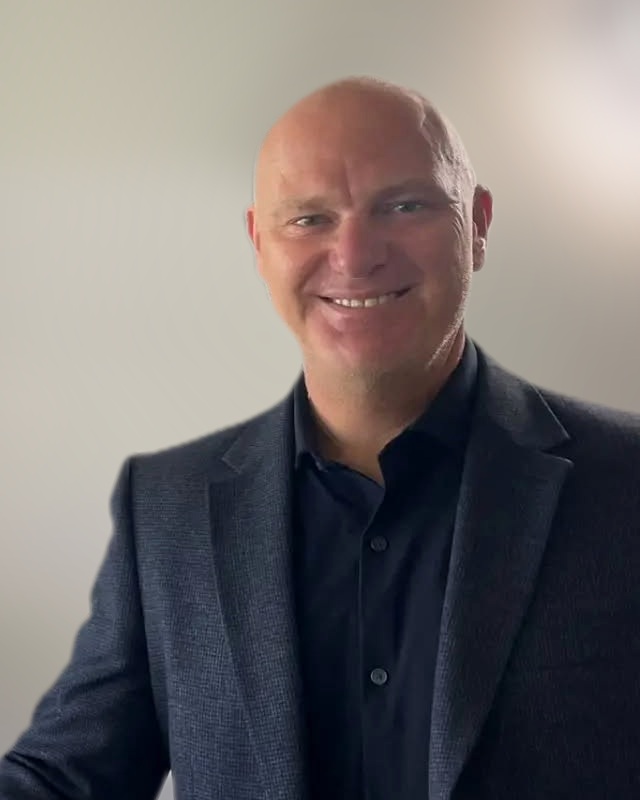
Neil Henry, Fractional CMO
CASE STUDY
Number one in Ireland, invisible in the UK. We went after the UK.
£120,000 to £510,000 in twelve months
Acquired by a European packaging distributor
Read the full story →CASE STUDY
Publishing constantly, converting nothing. We cut the volume and fixed the purpose.
Qualified leads up 132%, CAC down 37%
Acquired by Aptum Technologies
Read the full story →CASE STUDY
Automation packaging manufacturer, Ireland. 18-month fractional CMO engagement.
A referral from a steel manufacturer I'd worked with on organic growth. TekPak were the number one automation packaging manufacturer in Ireland and wanted to sell into the UK. They had no budget for paid advertising and asked for organic growth.
Their digital marketing was close to non-existent. The audit turned up a business with a genuine reputation and almost no way for anyone outside Ireland to discover it.
The competitor analysis was the useful part. In Ireland they were the obvious choice. In the UK and Europe they were invisible, and the companies filling that space were not better, just findable.
I had to convince the finance director and the owner before any of it happened. I took their historical marketing spend, the ROI on it and what it had actually delivered to the sales pipeline, and built a six and twelve month plan with KPIs attached to each stage.
That plan became the working rhythm. Weekly sessions with the FD to plan and prioritise, with an in-house marketing assistant executing alongside me.
The obvious move was to consolidate in Ireland, where they were already winning and where every pound of marketing would have produced a quick return.
I told them to go after the UK instead, where nobody had heard of them.
Consolidating would have grown revenue and capped the business at the size of its home market. The UK was harder, slower, and the only route to the scale they said they wanted. We built the ICP two ways, by UK region and by industry, so we were not trying to win the whole market at once, and targeted engineering, distribution and logistics specifically.
Print advertising, costing over £5,000 a month and reaching a small regional audience in Ireland plus some speculative spend in UK trade magazines.
It was producing roughly a twentieth of what organic was delivering. That money funded the website rebuild.
Not the social channels, and not the community work, useful as both were.
It was the website. The old one was buried in technical jargon, which felt right for a technical product and was the thing standing between a buyer and an enquiry. We rebuilt it so someone could understand what they were getting within one or two pages and then pick up the phone or send an email, which are the two things buyers in this industry actually do before committing to large volumes.
Technical products do not need technical websites. They need buyers who can self-qualify quickly and then speak to someone.
A full website rebuild, a B2B social presence on the channels their buyers used, and sustained participation in the engineering, distribution and logistics communities. Paid advertising came in after twelve months, once there was enough demand worth capturing.
They hired two UK sales representatives to handle the demand.
Eighteen months in, TekPak was acquired by a European packaging distributor. The UK presence was central to it. Buyers in Europe needed to see a UK business rather than an Irish one, because of the market volume and because UK regulatory compliance and quality standards carry weight. The acquirer was interested in what TekPak had built in Ireland over many years, and strongly influenced by the growth of the previous eighteen months.
That was the natural end of the engagement. The acquiring firm took marketing in-house as the transition began.
We've grown from 10,000 visits to almost 50,000 website visitors a month since implementing their advice.
That engagement ran in a different era. Today I'd put paid advertising in from the start rather than waiting twelve months, and I'd be building presence on LinkedIn and in the expert networks and community groups where technical B2B buyers actually spend time.
I'd also go further on geography. A .com with European microsites rather than a single site, given the presence they went on to build in Germany, France, Spain and Italy, and I'd be looking seriously at Asia.
The organic foundations would be the same. The difference is that SEO now means AEO as well, and the referral and direct traffic that made this work compound much faster when there is paid presence sitting alongside them.
CASE STUDY
Hosting, colocation and managed services. Three-year engagement across the UK, US and Canada.
The VP of Marketing came to me through a contact at Oracle, having also seen the content marketing work I'd done at TomTom. They wanted someone to shape their content marketing and digital presence properly.
Three years, two sites, two content teams and two audiences buying what was broadly the same product range. Weekly sessions with the VP of Marketing and the heads of marketing in the UK and North America. Nobody cared that I was in Stockport.
Data centre hosting, colocation and managed services, to technical buyers. CTOs and CIOs with infrastructure problems and budgets to match. Canada was the home market, the US presence was substantial because of where the data centres sat, and the UK was the smallest of the three.
Publishing for the sake of publishing. Blogs, case studies and white papers were going out regularly and producing almost nothing, because none of it started from a problem a CTO actually had.
Volume was never the issue. Purpose was.
Two decisions shaped everything after that.
The first was that content had to earn an enquiry rather than fill a calendar. Every piece needed to solve a problem a technical buyer recognised, which meant fewer pieces and more work on each one.
The second was that the UK could not be served the same way as North America. Same product, same company, genuinely different buyers. UK buyers are more reserved and want the point quickly, with no jargon and no padding, so the UK collateral went technical and direct. North American buyers responded to stats and to brand, and wanted a relationship built before a conversation, so that collateral went brand-led.
The strategy was universal. The delivery was not.
Case studies and white papers, distributed through email and social rather than left on the site to be found.
Enquiries almost doubled once those started going out. The weekly news content mattered too, but differently. It kept the brand in front of people between buying cycles, which is what made the case studies land when they arrived.
Underneath both sat a HubSpot database built deliberately for warm leads rather than cold volume, so what reached the sales team was someone who already knew who Cogeco Peer1 were and why they'd been worth reading.
The enquiry-to-meeting figure is the one I'd point at. That rose because of what sales received, not how much of it. A warm enquiry from someone who had read three pieces and understood the proposition converts differently to a cold one.
In the US and Canada we've seen 334% and 212% increases in website traffic.
The Asia expansion made Cogeco Peer1 an attractive acquisition, and Aptum Technologies bought the business. Marketing moved in-house in Toronto, which was the natural end of a three-year engagement.
I helped recruit three people into the Aptum marketing team so the workflow we'd built could carry on without me.
The content worked. What I'd change is how far it travelled.
The case studies and white papers went out through email and social. Today I'd put real paid budget behind them. Reddit works well in North America for this audience, with low cost per click and strong engagement if the creative is right and you target communities and decision-maker terms properly. LinkedIn alongside it, and Google search campaigns with a landing page built for each keyword set rather than one generic destination.
The database is the other thing I'd attack. Hundreds of thousands of engaged contacts sat in HubSpot and we used a fraction of them. A behavioural email programme and a remarketing layer over that audience would outperform most new acquisition.
I'd go after the buying committee properly too. We spoke to the CTO and the finance director, which was right as far as it went, but a CFO, a COO and a CIO all have different reasons to say no. Role-specific messaging across the account rather than one technical story told to everyone.
And I'd build for AI discovery. Cloud services are bought globally now, region barely matters, and buyers shortlist before they speak to anyone. That makes self-service discovery and visible technical credibility the whole game. The white papers and case studies become the proof an answer engine cites, not just something a prospect downloads. Third-party credibility matters for the same reason, Gartner Peer Insights and similar, where the backlink is worth as much as the listing.
Showing 4 of 4 case studies
Stacey Dillon, VP Digital, Europe
Paid and organic channels were running, but marketing ROI was underperforming at 2.1x, and slow lead response was costing the sales team momentum on inbound enquiries.
Restructured paid budget allocation, tightened LinkedIn targeting, optimised organic content for non-branded search terms, and streamlined the lead-response workflow.
Lead response time cut from 18 hours to 45 minutes, meaning sales could act on demand while it was still warm.
Timeframe: Results achieved and compounding within the engagement period.
"We saw a 178% increase in conversion rate and a 67% increase in budget efficiency inside three months. By month three our cost per lead had reduced by 38%. Incredible results, very attentive and knowledgeable."
The result
Supporting performance
Joe Delamere, Digital Content Director
Content output was steady, but leads and paid performance had plateaued, with no clear line from content to pipeline.
Built a content and SEO programme tied directly to conversion points, restructured Meta Ads targeting, and streamlined campaign production.
Campaign production time cut by 56%, letting the team ship more without adding headcount.
Timeframe: Three months for the initial lead surge, compounding over the following year.
"Digital leads surged by an impressive 80% in three months. Social engagement jumped 160% and organic traffic tripled. Marketing Converted's holistic approach positioned us ahead of our competitors."
The result
Supporting performance
Joshua Little, Marketing Manager
Paid campaigns were running but converting inefficiently, and LinkedIn wasn't producing enterprise-scale pipeline relative to spend.
Rebuilt targeted paid campaign strategy and restructured LinkedIn Ads creative and audience targeting.
Paid advertising became Companeo's No.1 ROI channel, with ROI from paid campaigns up 75%.
Timeframe: Five months for the initial surge, with LinkedIn pipeline building over a longer campaign window.
"In just 5 months our conversion rates increased 290%, ROI from paid campaigns shot up 75%, and paid advertising is now our No.1 ROI channel. Marketing Converted crafted strategic, targeted campaigns that resonated with our customers."
The result
Supporting performance
Madison Fuller, Senior Editor, Digital Content
Strong existing traffic base, but wasted ad spend and untapped potential in retargeting and email revenue per recipient.
Optimised Google Ads search-term and keyword targeting, restructured Meta retargeting, and increased marketing output without adding headcount.
The site now receives 750,000+ hits a month, with content, SEO and site optimisation work credited directly.
Timeframe: Six months for the Meta and retargeting gains.
"Nearly all of Marketing Converted's content suggestions generate more traffic than any other source on the website. Our site now receives 750,000+ hits a month. The credit goes to the SEO, content and site optimisation work."
The result
Supporting performance
By channel
A running record of the numbers we've moved, grouped by the channel that moved them.
Senior marketing support for growing businesses across B2B and B2C.
I work with no more than four companies at a time. Currently 3 engagements running, 1 place available.